
Overconfidence bias is one of the most common investing mistakes—and one of the most expensive. It happens when investors overestimate their ability to predict the market, pick winning stocks, or time the perfect buy and sell points. In simple terms, overconfidence bias makes people think: “I’m smarter than the average investor, so I’ll do better.”
In the US stock market, overconfidence bias shows up everywhere—from beginners placing their first trade on a mobile app to experienced investors making big bets during bull markets. This bias often leads to taking too much risk, trading too frequently, ignoring diversification, and holding onto losing positions for too long.
If you want to invest successfully over the long term, learning to spot and manage overconfidence bias can protect your portfolio from major mistakes.
What Is Overconfidence Bias in Investing?
Overconfidence bias is a behavioral finance concept where investors believe they know more than they actually do. It’s not just arrogance—it’s a psychological tendency that affects decision-making.
Overconfidence can show up in three common ways:
- Overestimating your knowledge
- “I understand the stock market better than most people.”
- Overestimating your skill
- “My stock picks are consistently better than the S&P 500.”
- Overestimating your control
- “If the market drops, I’ll exit at the perfect time.”
The problem is that the US stock market is influenced by thousands of factors—corporate earnings, interest rates, inflation data, news events, global trends, investor sentiment, and unpredictable shocks. Even professionals with teams of analysts can’t consistently predict short-term moves.
Why Overconfidence Bias Makes Investors Take Too Much Risk
Overconfidence bias often leads investors to take risks that don’t match their actual knowledge, experience, or financial situation. Here’s how it happens in real life.
1) Trading Too Much (Overtrading)
Overconfident investors often believe they can “beat the market” by buying and selling frequently. They may chase hot stocks, jump in and out of trades, and constantly react to market news.
US-market example:
An investor buys and sells popular stocks like Tesla, Nvidia, or Apple every week because they think they can catch short-term swings. Even if they’re right sometimes, frequent trades can lead to:
- More mistakes
- Higher tax bills (short-term capital gains)
- Increased fees or spreads
- Emotional decision-making
In many cases, overtrading reduces long-term returns compared to simply investing in a low-cost index fund.
2) Ignoring Diversification
Diversification means spreading your money across different assets to reduce risk. Overconfident investors often skip diversification because they believe a few strong picks are enough.
Example:
Instead of buying a broad ETF like VOO (S&P 500) or VTI (Total US Market), an investor puts 80% of their portfolio into 2–3 “favorite” stocks.
If one of those companies experiences bad earnings or a scandal, the portfolio can drop dramatically.
Overconfidence bias can make people think:
- “I don’t need diversification because I chose the best companies.”
But even great companies can underperform for years.
3) Using Too Much Leverage (Margin Risk)
Some investors borrow money from a broker to buy more stocks. This is called margin trading. Overconfidence can push investors to overuse margin because they assume the market will go up and they’ll easily pay back the loan.
Example:
An investor borrows $10,000 on margin to buy more shares during a market rally. If the market drops quickly, they could face a margin call, forcing them to sell at a loss.
This is one of the fastest ways overconfidence turns into real financial damage.
4) Taking Bigger Bets After Winning
One of the most dangerous forms of overconfidence happens after a winning streak. Investors often confuse luck with skill.
US-market example:
An investor buys a tech stock and it rises 40% in three months. They assume their “strategy is proven,” so they double down with a much larger investment.
This can lead to “winner’s curse” behavior—taking bigger risks right before a pullback.
5) Believing You Can Time the Market Perfectly
Market timing is the attempt to buy at the lowest point and sell at the highest point. Overconfident investors believe they can consistently do this.
They may say:
- “I’ll exit before the crash.”
- “I’ll buy right at the bottom.”
But most market moves happen quickly, often driven by unexpected headlines.
Example:
During periods of volatility, the market may drop sharply and then rebound within days. Investors who sell in panic can miss the recovery.
A long-term strategy often beats trying to time every move.
Real-Life Signs You Might Have Overconfidence Bias
Here are common signs overconfidence bias is influencing your investing decisions:
- You believe your stock picks “can’t lose”
- You rarely research the downside
- You ignore negative news about your investments
- You take advice only from social media or influencers
- You trade frequently because you “feel” confident
- You increase risk after a few wins
- You feel the need to constantly “do something” in the market
- You measure success by short-term gains instead of long-term performance
Overconfidence bias doesn’t always look reckless. Sometimes it looks like extreme certainty.
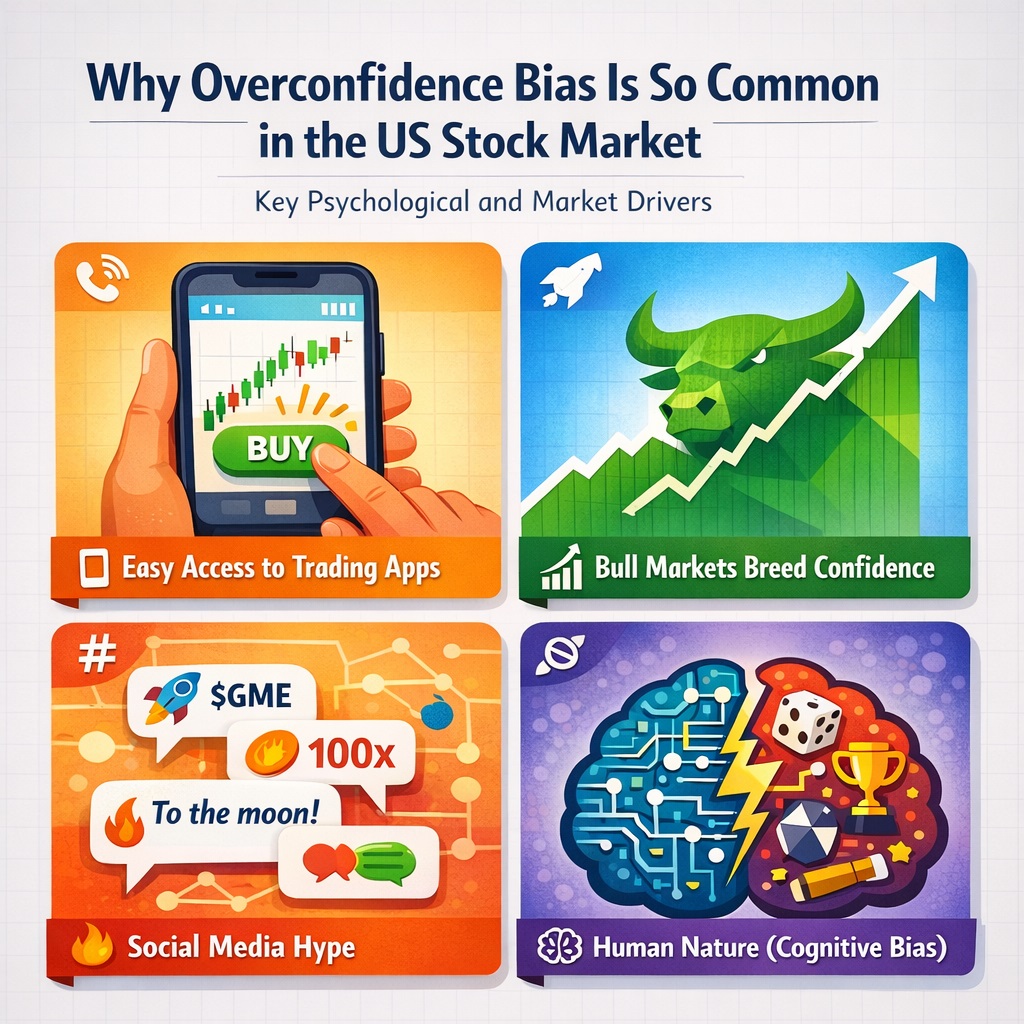
Why Overconfidence Bias Is So Common in the US Stock Market
Overconfidence bias is especially common in the US because of:
📱 Easy Access to Trading Apps
Modern brokerages make investing quick and simple. You can buy shares in seconds, which encourages fast decisions.
📈 Bull Markets Create Confidence
When the market is rising, many investors feel like investing is “easy.” Gains can make investors believe they have a special talent.
🔥 Social Media Hype
Online communities often highlight winners, not losers. Seeing someone post massive gains can make you believe you can do the same, leading to risky behavior.
🧠 Human Nature
People naturally want to believe they are above average at important skills. Investing is no different.
The Cost of Overconfidence: What It Can Do to Your Portfolio
Overconfidence bias can cause major problems such as:
Bigger Losses During Market Drops
When your portfolio is too aggressive, you may panic-sell at the worst moment.
Missed Long-Term Growth
Jumping in and out of positions can keep you from benefiting from long-term compounding.
Higher Taxes
Frequent selling often triggers short-term capital gains taxes, which are usually higher than long-term rates.
Emotional Burnout
Overconfident investors often experience stress because they’re constantly monitoring prices and news.
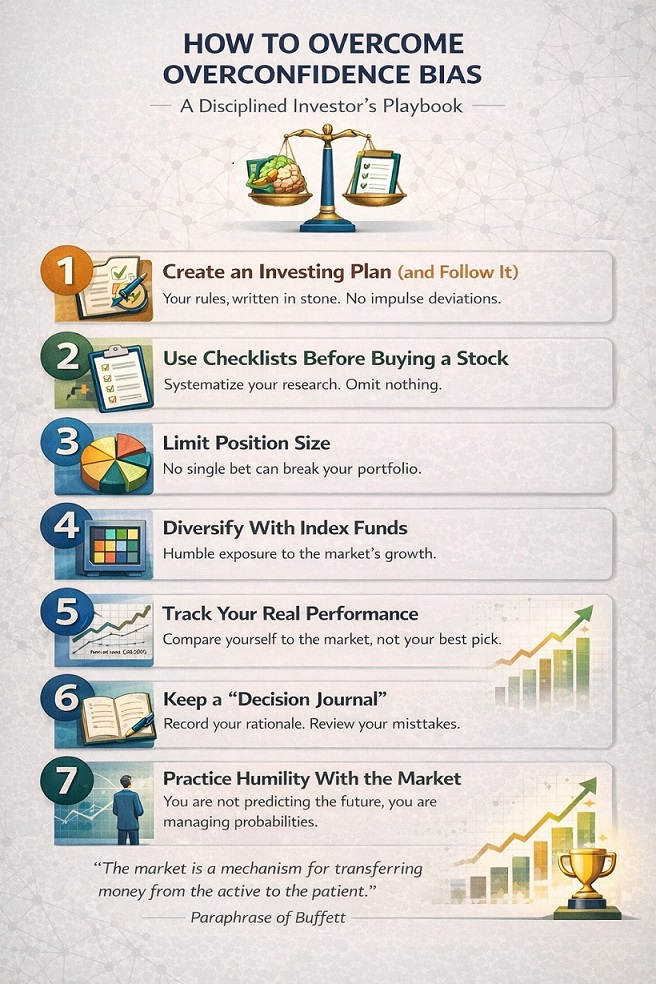
How to Overcome Overconfidence Bias (Practical Strategies)
The goal isn’t to eliminate confidence. The goal is to build realistic confidence based on discipline and process.
1) Create an Investing Plan (and Follow It)
Write down:
- Your goals (retirement, house, savings)
- Your time horizon
- Your target asset allocation (stocks vs bonds)
- When you will rebalance
A written plan protects you from emotional decisions.
2) Use Checklists Before Buying a Stock
Before buying any stock, ask:
- Do I understand how the company makes money?
- What are the biggest risks?
- Is this a long-term investment or a trade?
- How much can I lose and still be okay?
- Is it overvalued compared to fundamentals?
This forces you to slow down.
3) Limit Position Size
A simple rule many investors use:
- Don’t put more than 5%–10% of your portfolio into one stock (especially as a beginner).
This reduces concentration risk.
4) Diversify With Index Funds
If you’re not sure how to analyze individual stocks, consider using:
- S&P 500 ETFs
- Total market ETFs
- Target-date retirement funds (for retirement accounts)
Diversification can reduce overconfidence mistakes.
5) Track Your Real Performance
Many investors believe they outperform the market, but don’t measure properly.
To track performance:
- Compare your portfolio return to the S&P 500
- Include all costs and taxes
- Measure over 1–3 years, not 2 months
This adds reality to confidence.
6) Keep a “Decision Journal”
Write down:
- Why you bought a stock
- What you expect to happen
- When you will sell
- What would prove you wrong
Over time, you’ll see whether your predictions were accurate or emotional.
7) Practice Humility With the Market
A powerful mindset shift is this:
“The market can stay irrational longer than I can stay confident.”
Confidence should come from consistent habits—not predictions.
Final Thoughts: Confidence Is Good—Overconfidence Is Costly
Overconfidence bias is a normal human behavior, but in investing it can lead to serious financial mistakes. It encourages investors to take unnecessary risks, trade too frequently, and ignore diversification. In the US stock market, where headlines and hype move fast, overconfidence can feel rewarding at first—but painful later.
The best investors aren’t the ones who predict the market perfectly. They’re the ones who:
- Stay disciplined
- Manage risk
- Diversify
- Think long term
- Keep emotions under control
If you want to grow wealth over time, managing overconfidence bias is one of the smartest moves you can make.
Frequently Asked Questions About Overconfidence Bias in Investing
What is overconfidence bias in investing?
Overconfidence bias in investing is the tendency to overestimate your ability to predict the market, select winning stocks, or time trades correctly. This bias can lead investors to take excessive risks and make decisions based on confidence rather than data.
Why is overconfidence bias dangerous for investors?
Overconfidence bias is dangerous because it often leads to overtrading, lack of diversification, ignoring downside risk, and holding losing positions too long. These behaviors can increase losses, taxes, fees, and emotional stress while reducing long-term returns.
How does overconfidence bias affect stock market returns?
Overconfidence bias can reduce stock market returns by encouraging frequent trading, concentrated bets on a few stocks, and attempts to time the market. Investors driven by overconfidence often underperform simple, diversified, long-term strategies.
What are common signs of overconfidence bias in investing?
Common signs include believing your stock picks cannot fail, ignoring negative information, increasing risk after short-term wins, trading based on feelings or hype, and measuring success by short-term gains instead of long-term performance.
How can investors reduce overconfidence bias?
Investors can reduce overconfidence bias by following a written investment plan, diversifying across assets, limiting position size, tracking performance against benchmarks like the S&P 500, using decision checklists, and focusing on long-term goals rather than short-term predictions.
One Reply to “Overconfidence Bias: Why Investors Take Too Much Risk Best Explanation in 5 Minutes”