
Loss aversion is one of the most powerful forces in investing—and it affects almost everyone, from first-time stock buyers to experienced professionals. In simple terms, loss aversion means people feel the pain of losing money more strongly than the pleasure of gaining the same amount.
For example, losing $100 usually hurts more than gaining $100 feels good. That emotional imbalance can lead to poor decisions in the stock market, like panic selling during downturns or holding onto losing stocks for too long.
In this guide, you’ll learn what loss aversion is, why it happens, how it impacts real investors in the US stock market, and practical ways to manage it so you can become a smarter, calmer long-term investor.
What Is Loss Aversion in Investing?
Loss aversion is a concept from behavioral finance and psychology that explains how humans react to money gains and money losses. The basic idea is:
People fear losses more than they value gains.
So when your investment portfolio drops, it can trigger fear, stress, and emotional reactions—even if the drop is temporary and normal.
Loss aversion is one reason stock market investing feels stressful, especially for beginners. The market moves up and down daily, and even small losses can feel personal.
Why Loss Aversion Exists (Human Psychology)
Loss aversion is part of how humans are wired. For thousands of years, avoiding danger and protecting resources helped people survive. Losing something important—food, shelter, safety—was a bigger threat than gaining something extra.
In modern life, that survival instinct gets applied to money and investing.
When you see a stock price drop, your brain reacts like something “bad” is happening. This can lead to quick decisions that feel safe in the moment but hurt long-term results.
How Loss Aversion Shows Up in the US Stock Market
Loss aversion doesn’t just create fear—it changes behavior. Here are the most common ways it affects investors.
1) Panic Selling During Market Drops
One of the most visible effects of loss aversion is panic selling. When markets fall, investors often sell just to “stop the pain,” even if the investment is solid long-term.
US-market example:
Imagine you invest $5,000 in an S&P 500 ETF. A few months later, the market drops 12% due to recession fears. Your investment falls to $4,400.
Even though the S&P 500 has historically recovered over time, loss aversion makes you feel like you must sell now before it gets worse.
Many investors sell near the bottom—and then hesitate to buy back in when prices rise again.
2) Holding Losing Stocks Too Long (The “Hope” Trap)
Loss aversion can also cause the opposite behavior: refusing to sell a losing stock because selling makes the loss feel “real.”
Instead of thinking logically, investors say:
- “It’s not a loss until I sell.”
- “I’ll wait until it comes back.”
This can trap people in bad investments for years.
Example:
You buy a single company stock at $50 per share. It drops to $30. You avoid selling because you don’t want to accept the loss. But later, the company’s business weakens further and the stock drops to $15.
Loss aversion can turn a small manageable loss into a major one.
3) Avoiding Investing Completely (Fear of Losing Money)
Loss aversion can stop people from investing altogether—especially beginners.
Many Americans keep money in:
- Savings accounts
- Checking accounts
- Cash
Even when inflation reduces purchasing power, loss aversion makes investing feel too risky.
Example:
Someone wants to invest for retirement but worries:
- “What if the market crashes after I invest?”
So they delay investing for years, missing out on long-term compounding.
This is one of the biggest hidden costs of loss aversion: missed opportunity.
4) Selling Winners Too Early (Locking in Gains Fast)
Many investors sell winning investments too early because they fear losing the gains they already made.
This is called the disposition effect, and it’s closely tied to loss aversion.
Example:
You buy a stock at $100 and it rises to $125. You sell quickly to “secure profits,” even though the company is doing well and could grow further.
Later, the stock rises to $180—but you’re already out.
Loss aversion makes you protect small wins instead of allowing long-term winners to grow.
5) Overreacting to Short-Term Market Noise
The US stock market moves daily due to:
- inflation reports
- Federal Reserve interest rate decisions
- earnings announcements
- geopolitical events
- breaking news
Loss-averse investors treat these normal fluctuations like danger signals.
Instead of sticking to a plan, they react emotionally:
- “Should I sell everything?”
- “Should I wait for a better time?”
- “Is the market about to crash?”
This constant reaction leads to inconsistent strategy and weak long-term performance.
Loss Aversion and Risk: Why It Leads to Bad Decisions
Loss aversion can make investors take the wrong type of risk, at the wrong time.
It causes risk avoidance when risk is necessary
To grow wealth long term, some risk is required. But loss aversion can push investors to avoid stocks completely—keeping money in low-growth assets.
It causes risk-taking when people are losing
When investors are down, they sometimes take bigger risks to recover quickly.
Example:
A person loses money on a stock and then jumps into high-risk options trading to try to make it back fast.
Loss aversion turns into desperation, which is dangerous.
Realistic Example: Loss Aversion in a Beginner Portfolio
Let’s say a new investor builds this portfolio:
- 70% S&P 500 ETF
- 20% bond ETF
- 10% individual stocks
They invest $10,000.
Then the market drops 10% and the portfolio becomes $9,000. The investor feels stressed and thinks:
- “What if it drops another 20%?”
- “I should sell now and buy later.”
But when they sell, two things can happen:
- The market rebounds quickly, and they miss it
- They wait too long because fear continues
This is how loss aversion hurts long-term results. It’s not about one bad decision—it’s about repeating the pattern.
Why Loss Aversion Is Stronger in Retirement Accounts
Loss aversion gets even more intense when the money is tied to long-term goals like retirement.
In the US, many people invest through:
- 401(k) plans
- Roth IRAs
- Traditional IRAs
When the market falls, people worry:
- “Am I going to lose my retirement?”
This fear can lead to risky timing decisions like switching funds during downturns.
But historically, long-term retirement investing works best with consistency—especially with diversified index funds.
How to Overcome Loss Aversion (Practical Strategies)
Loss aversion is normal, but you can reduce its impact.
1) Focus on Time Horizon, Not Daily Price
If you’re investing for 10–30 years, daily moves are mostly noise.
A helpful mindset:
- 1 day: unpredictable
- 1 year: uncertain
- 10+ years: historically favorable for diversified stocks
2) Use Automatic Investing
Automatic investing helps remove emotion.
Examples:
- weekly or monthly contributions to an index fund
- dollar-cost averaging inside a 401(k)
This reduces the urge to “time the market.”
3) Diversify Your Portfolio
Diversification lowers extreme swings.
Instead of one stock, consider:
- index funds (S&P 500 or total market)
- a mix of asset classes (stocks + bonds)
A smoother portfolio reduces emotional stress.
4) Decide Your “Selling Rules” Before You Buy
Before buying an investment, set rules like:
- “I will sell if the company fundamentals change.”
- “I will rebalance once per year.”
- “I will not sell during normal market corrections.”
This prevents emotional selling.
5) Limit Checking Your Portfolio
Checking your portfolio too often increases fear and stress.
A simple rule for long-term investors:
- Check monthly or quarterly, not daily.
The more you look, the more you feel losses—even when you’re doing fine long term.
6) Reframe Losses as Normal Market Behavior
Stock market declines are normal. Corrections and bear markets happen. The key is learning that volatility is not failure—it’s part of investing.
A better mindset:
“Temporary drops are the cost of long-term gains.”
Final Thoughts: Loss Aversion Can Be Managed
Loss aversion is a powerful emotional bias that makes investors fear losses more than they enjoy gains. It can lead to panic selling, holding losers too long, selling winners too early, and avoiding investing altogether.
The best investors aren’t fearless—they are disciplined. They understand that short-term losses are normal, and they focus on long-term strategy, diversification, and consistent investing.
If you can manage loss aversion, you’ll gain something most investors never achieve: calm confidence in the market.
Related Posts
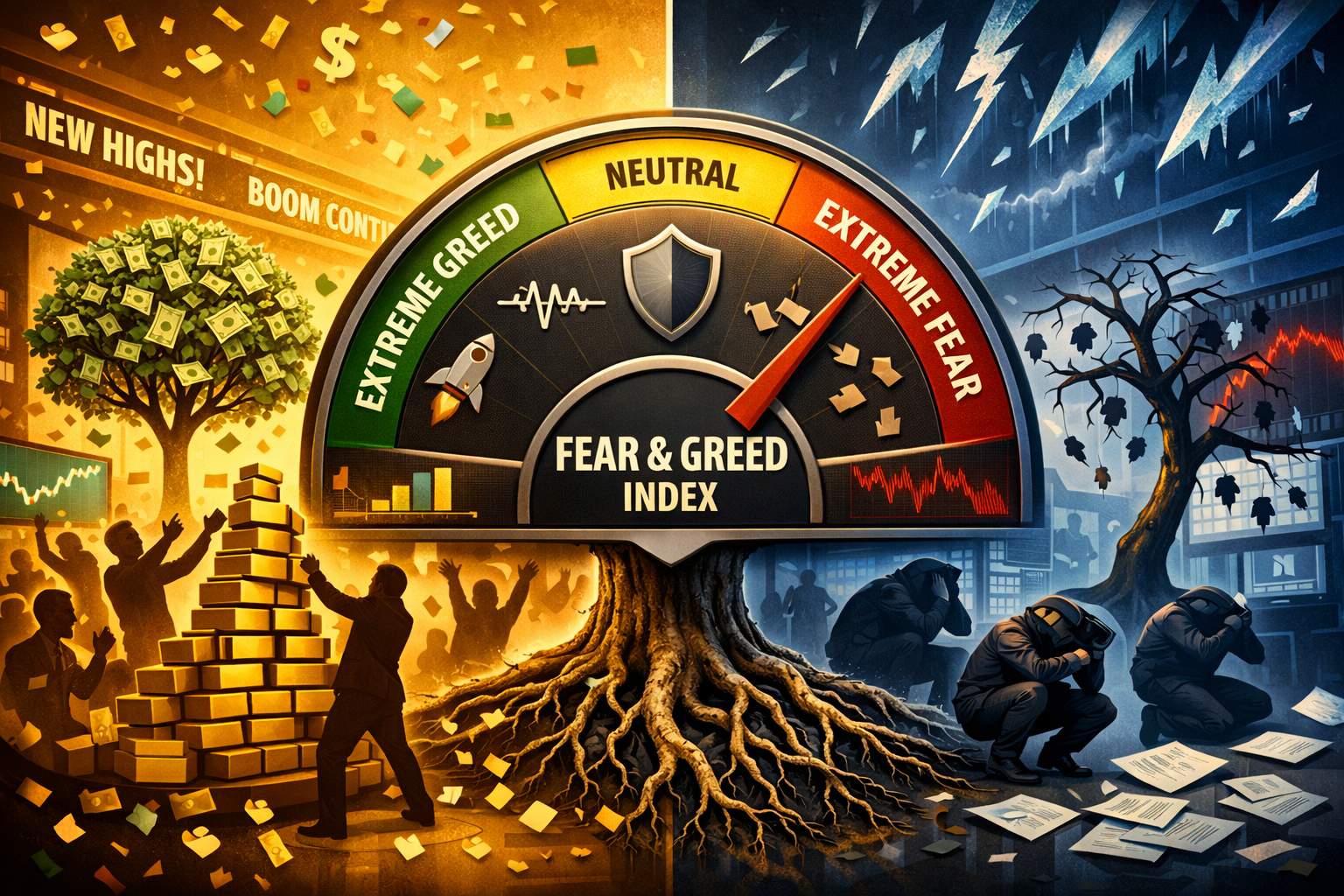
Fear and Greed Index Explained: How Emotions Control the Market
Fear and Greed Index Explained: How Emotions Control the Market…
What Is Confirmation-Bias ? Examples & Impact
Confirmation-bias is one of the most common psychological traps in…
What Is Panic Selling? How Fear Triggers Market Crashes
What Is Panic Selling? How Fear Triggers Market Crashes Financial…
3 Replies to “What Is Loss Aversion? Why Investors Fear Losses”