
Market sentiment describes the overall mood, attitude, and psychology of investors toward the stock market or a specific asset. In simple terms, it reflects whether investors are feeling optimistic (bullish) or pessimistic (bearish).
In the US stock market, market sentiment plays a huge role in short- and medium-term price movements. While fundamentals like earnings and revenue matter in the long run, sentiment often drives prices in the moment. Understanding bullish and bearish psychology can help investors avoid emotional mistakes and make better decisions.
This guide explains market sentiment in plain English, how bullish and bearish psychology works, how it shows up in real US-market examples, and how you can use sentiment wisely without letting emotions control your portfolio.
What Is Market Sentiment?
Market sentiment is the collective feeling of investors about the direction of the market:
- Bullish sentiment = confidence, optimism, and expectation of rising prices
- Bearish sentiment = fear, pessimism, and expectation of falling prices
Market sentiment is not based on one person’s opinion. It reflects the combined actions and emotions of millions of investors—individuals, institutions, traders, and funds.
Importantly, market sentiment can push prices away from fair value in the short term. Stocks can become overbought when optimism is extreme or oversold when fear dominates.
Bullish Psychology: When Investors Feel Optimistic
A bullish market sentiment means investors believe prices will rise. This optimism often feeds on itself—higher prices increase confidence, which leads to more buying.
Common Signs of Bullish Sentiment
- Rising stock prices across many sectors
- Strong demand for stocks and ETFs
- Positive media headlines
- High participation from retail investors
- Increased risk-taking
Bullish Psychology in Action
Imagine the US economy is growing, unemployment is low, and companies report strong earnings. The S&P 500 keeps hitting new highs. Investors feel confident and say things like:
- “The economy is strong.”
- “Stocks only go up in the long run.”
- “I don’t want to miss out.”
As a result, more people buy stocks—not just because of fundamentals, but because they expect prices to keep rising. This buying pressure pushes prices even higher.
Bearish Psychology: When Fear Takes Over
A bearish market sentiment means investors expect prices to fall. Fear becomes the dominant emotion, and selling pressure increases.
Common Signs of Bearish Sentiment
- Falling stock prices
- Negative headlines and gloomy forecasts
- High volatility
- Increased selling and reduced risk-taking
- Preference for cash or safe assets
Bearish Psychology in Action (US Example)
Suppose inflation rises quickly and the Federal Reserve starts raising interest rates. News outlets focus on recession risks. The market drops 10–15% in a short period.
Investors may think:
- “This could get much worse.”
- “I should sell before I lose more.”
- “It’s safer to stay out of the market.”
As more investors sell, prices fall further—reinforcing fear. This cycle can continue until sentiment stabilizes.
Why Market Sentiment Matters More Than You Think
Market sentiment can:
- Amplify price movements
- Create bubbles and crashes
- Override fundamentals temporarily
- Influence short-term market trends
In the short term, sentiment often matters more than financial data. Even good companies can see their stock prices fall during periods of extreme fear.
The Feedback Loop: How Sentiment Drives Prices
Market sentiment works through a feedback loop:
- Prices move up or down
- Investors react emotionally
- Their actions (buying or selling) push prices further
- Sentiment strengthens
This loop explains why markets sometimes overshoot—going too high in bullish periods and too low in bearish ones.
Bullish vs Bearish Sentiment: Key Differences
| Feature | Bullish Sentiment | Bearish Sentiment |
| Dominant Emotion | Optimism | Fear |
| Investor Behavior | Buying, risk-taking | Selling, risk avoidance |
| Market Trend | Rising | Falling |
| Media Tone | Positive | Negative |
| Common Mistake | Overconfidence | Panic selling |
Common Sentiment Indicators in the US Stock Market
Investors use various tools to gauge market sentiment. While none are perfect, they provide useful context.
1) Volatility Index (VIX)
Often called the “fear index,” the VIX measures expected market volatility.
- Low VIX = calm, bullish sentiment
- High VIX = fear, bearish sentiment
2) Put/Call Ratio
This compares bearish option bets (puts) to bullish bets (calls).
- High ratio = more fear
- Low ratio = more optimism
3) Market Breadth
This looks at how many stocks are rising versus falling.
- Broad participation supports bullish trends
- Weak breadth can signal caution
4) Investor Surveys
Surveys like the AAII sentiment survey track how investors feel about the market’s direction.
The Role of Media and Headlines
Media plays a powerful role in shaping market sentiment.
- Positive headlines reinforce bullish psychology
- Negative headlines intensify bearish psychology
Because bad news attracts attention, fear-driven stories often dominate during downturns—even when long-term fundamentals remain strong.
For beginners, this can create emotional whiplash: optimism one month, panic the next.
Market Sentiment and Behavioral Biases
Market sentiment is closely tied to behavioral biases:
Herd Mentality
Investors follow what others are doing instead of thinking independently.
FOMO (Fear of Missing Out)
In bullish markets, investors buy simply because prices are rising.
Loss Aversion
In bearish markets, investors sell to avoid further losses—even at the wrong time.
Understanding these biases helps explain why sentiment can swing so quickly.
How Long-Term Investors Should Use Market Sentiment
Market sentiment should inform, not control, your decisions.
What Sentiment Is Good For
- Understanding short-term risk
- Avoiding emotional extremes
- Adjusting expectations during volatile periods
What Sentiment Is NOT Good For
- Timing the exact market top or bottom
- Replacing a long-term strategy
- Making impulsive decisions
Practical Strategies to Handle Bullish and Bearish Sentiment
1) Stick to a Long-Term Plan
Have a clear investment plan based on:
- Goals
- Time horizon
- Risk tolerance
A plan reduces emotional reactions.
2) Avoid Chasing Extreme Optimism
When sentiment is extremely bullish:
- Be cautious about overpaying
- Avoid taking excessive risk
- Remember that markets move in cycles
3) Don’t Panic During Bearish Phases
Bear markets and corrections are normal parts of investing.
Instead of selling out of fear:
- Review fundamentals
- Rebalance if needed
- Focus on long-term goals
4) Use Dollar-Cost Averaging
Investing regularly helps smooth out the impact of sentiment swings.
You buy:
- More shares when prices are low
- Fewer shares when prices are high
5) Limit News Consumption
Constant exposure to market news can amplify emotions.
Checking your portfolio and news too often increases stress and emotional decisions.
Realistic Example: Market Sentiment in a Typical Year
In a single year, the US stock market may:
- Rally strongly in the first half (bullish sentiment)
- Pull back due to economic concerns (bearish sentiment)
- Recover later as confidence returns
Long-term investors who stay invested usually outperform those who react emotionally to each shift in sentiment.
Final Thoughts: Sentiment Explains the “Why” Behind Market Moves
Market sentiment reflects the emotional side of investing. Bullish psychology pushes prices higher through optimism and confidence, while bearish psychology pulls prices lower through fear and uncertainty.
Successful investors understand that:
- Sentiment changes faster than fundamentals
- Emotions can distort prices
- Long-term discipline beats short-term emotion
By recognizing bullish and bearish psychology, you gain an important edge—not by predicting the market, but by avoiding emotional mistakes that hurt returns.
Related Posts
Disposition Effect Explained: Why Investors Sell Winners Too Early
The disposition effect is one of the most studied and…
Anchoring Bias in Investing: Why First Prices Affect Decisions
Anchoring bias is one of the most common—and most damaging—psychological…
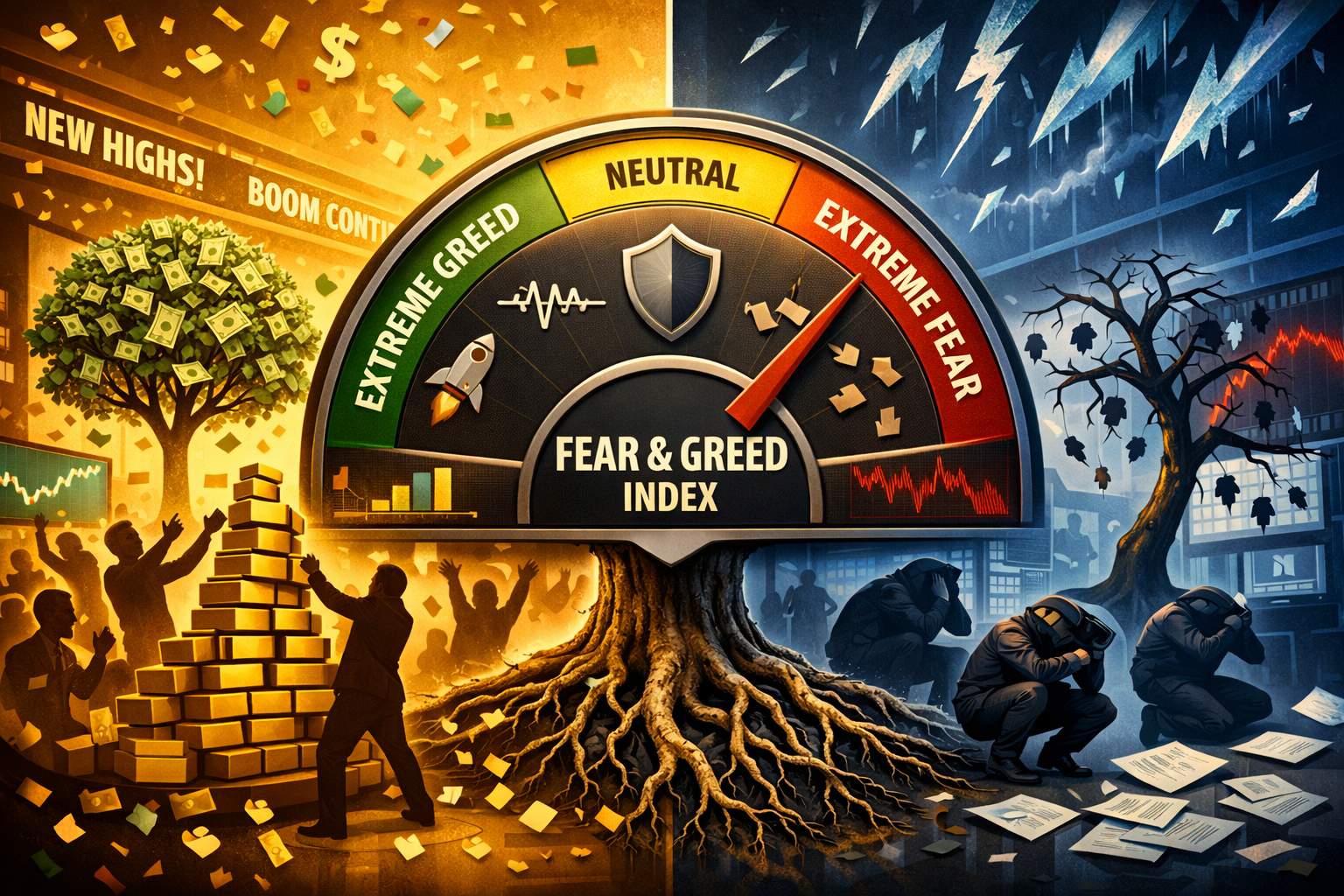
Fear and Greed Index Explained: How Emotions Control the Market
Fear and Greed Index Explained: How Emotions Control the Market…