
Options Contract: The Right (Not the Obligation) to Buy or Sell an Asset
An options contract is a financial agreement that gives the buyer the right—but not the obligation—to buy or sell an asset at a specific price within a set period of time. Options are a popular type of derivative because they offer flexibility, defined risk for buyers, and many strategic uses in investing and trading.
Although options may seem intimidating at first, the core idea is simple. This beginner-friendly guide explains what options contracts are, how they work, the main types of options, and realistic examples suitable for everyday finance discussions.
What Is an Options Contract?
An options contract is a derivative whose value is based on an underlying asset, such as a stock, index, or ETF. The contract gives the buyer a choice, not a requirement.
Every options contract includes:
- An underlying asset
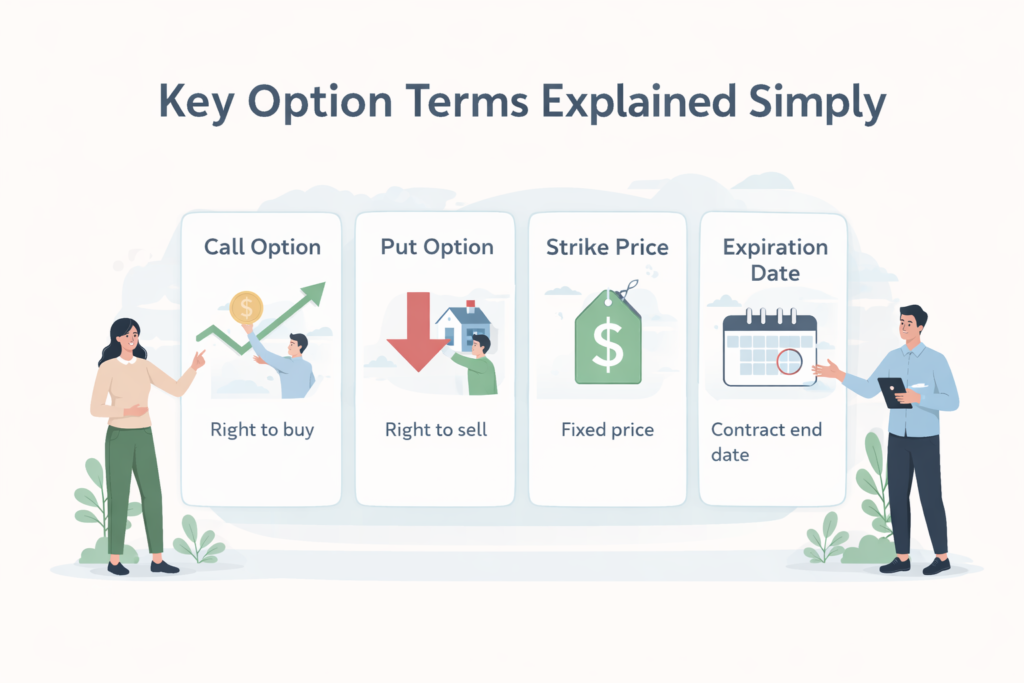
- A strike price (the agreed-upon price)
- An expiration date
- A premium (the price paid for the option)
Key distinction:
If you buy an option, you are not required to exercise it. If market conditions aren’t favorable, you can let the option expire.
Why Options Are Popular
Options are widely used because they allow investors to:
- Control risk more precisely
- Profit from rising, falling, or sideways markets
- Use less capital than buying assets outright
- Hedge existing investments
For example, an investor who owns shares of Apple Inc. may use options to protect against a potential short-term decline without selling the stock.
The Two Main Types of Options
There are two basic kinds of options contracts: call options and put options.
1. Call Options (Right to Buy)
A call option gives the buyer the right to buy the underlying asset at the strike price before the expiration date.
Beginner example:
You buy a call option on Apple stock with a strike price of $180. If Apple’s stock rises to $200, you can buy shares at $180 using the option, making it valuable. If the stock stays below $180, you simply let the option expire.
Call options are often used when investors expect prices to rise.
2. Put Options (Right to Sell)
A put option gives the buyer the right to sell the underlying asset at the strike price before expiration.
Beginner example:
You buy a put option on Apple stock with a strike price of $170. If the stock falls to $150, you can sell shares at $170, benefiting from the drop. If the price stays above $170, the option expires.
Put options are commonly used for protection or when expecting prices to fall.
Understanding the Underlying Asset
The underlying asset is what the option is based on. It can be:
- Individual stocks
- Market indexes like the S&P 500
- Exchange-traded funds (ETFs)
- Commodities or currencies
If the underlying asset’s price changes, the option’s value changes as well. Understanding how the underlying asset behaves is more important than understanding every technical detail of the option itself.
Key Option Terms Explained Simply
Options are not just for speculation—they are widely used in practical investing.
Hedging example:
An investor owns 100 shares of a stock and buys a put option to protect against a sharp drop. If the stock falls, gains from the put help offset losses.
Income example:
An investor sells a call option against shares they already own (called a covered call) to generate extra income from the premium.
Speculation example:
A trader buys a call option expecting a short-term price surge, risking only the premium.
Options vs. Futures and Stocks
Options differ from other financial instruments in important ways.
- Stocks: Represent ownership
- Futures: Create an obligation to buy or sell
- Options: Provide a right, not an obligation
This flexibility is why options are often considered more beginner-friendly than futures—when used correctly.
Risks of Options Contracts
While options limit risk for buyers, they still carry risks:
- Options can expire worthless
- Time decay reduces option value as expiration approaches
- Complex strategies can increase losses
Selling options, in particular, can involve significant risk and is usually better suited for experienced investors.
Are Options Good for Beginners?
Options can be appropriate for beginners if approached carefully. Beginners should:
- Start with basic call and put options
- Focus on well-known underlying assets
- Avoid excessive leverage
- Learn risk management first
Education and patience are essential when learning options.
Final Thoughts
An options contract gives the right—but not the obligation—to buy or sell an asset at a set price before a specific date. This flexibility makes options powerful tools for hedging, income generation, and speculation.
For beginners, the key takeaway is simple: options are about choice and control. When you understand the underlying asset and the limited-risk nature of buying options, these contracts become far less intimidating—and far more useful in building smarter investment strategies over time.
Related Posts
Intrinsic Value Explained: The Real Value of an Option in Market
If you’re learning options trading, one of the most important…
Options Premium: What It Means and How It Works
If you’re learning options trading, you’ve probably noticed something immediately:…
Futures Contract: An Agreement to Buy or Sell at a Future Date at a Fixed Price
Futures Contract: An Agreement to Buy or Sell at a…